
International product information

The product details shown after you switch describe the versions of Rho authorized outside the United States, including the Rho Score, which is not part of the US version.

US product information

The product details shown after you switch describe the version of Rho authorized in the United States, which reports whether a patient is Rho Positive.

Request a demo →
Rho Enterprise

Screening at scale, reported to your PACS.

Rho Enterprise is installed inside your network and analyzes eligible frontal X-rays as they arrive, for patients aged 50 and older who have not had a recent DXA. It flags those with possiblelikely to have low bone mineral density at the femoral neck or lumbar spine (L1 to L4), and the Rho Report lands in the study in PACS, to prompt a clinical assessment of bone health.

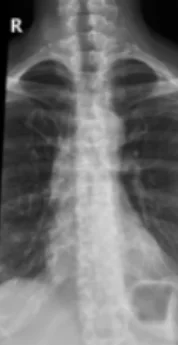
Sample thoracic spine x-ray
Rho™ Opportunistic screen for low bone mineral density
Screening result Rho™ Positive
Patient Rho™ Score
7

In a clinical validation study of 3,729 patients, 92% of those with a Rho™ Score of 7 had low BMD.

Derived from x-ray classified as: Thoracic

Illustrative interface with the sample x-ray from the Rho User Manual. Report content varies by jurisdiction.
What Rho reads

Six frontal views. No special protocol.

Rho works on images acquired for other reasons. There is no dedicated acquisition or positioning protocol.

  • Chest
  • Thoracic spine
  • Lumbar spine
  • Pelvis
  • Knee
  • Hand and wrist
What Rho reports

A Rho Positive finding for flagged studies. A Rho Score from 1 to 10.

Rho reports a Rho Positive finding: possible low bone mineral density at the femoral neck or L1 to L4. By default, only Rho Positive reports are sent to PACS, so radiologists see a report only for flagged studies.

Rho should not be used to rule out low bone mineral density. Radiologists and referring clinicians should follow recommended practices for screening and assessment, regardless of the absence of a Rho report.

Rho reports a Rho Score from 1 to 10, where 1 is less likely and 10 is more likely to have low bone density. The report shows how often patients with the same score had low BMD in the clinical validation study.

By default, reports with a Rho Score of 6 and up are sent to PACS. Each institution can change that threshold by body part and sex to match its DXA capacity.

Showing the United Statesinternational report.

Device identification: Basic UDI-DI 628719409RhoVV. CE 2862.

16 Bit
Rho™Opportunistic screen for low bone mineral density
Sample thoracic spine x-ray

Derived from x-ray classified as:
Thoracic*

Screening result Rho™ Positive

Rho™ has the following intended use

Rho™ is an opportunistic pre-screening tool that analyzes standard frontal radiographs of the lumbar spine, thoracic spine, chest, pelvis, knee, or hand/wrist performed in patients aged 50 years and older. The algorithm was developed using machine learning to provide information that may be useful for prompting the clinical assessment of bone health.

The device's positive agreement (sensitivity), negative agreement (specificity) and area under the receiver operator characteristic (ROC) curve were assessed in three independent clinical datasets.

Customer Specific Notes

Optional text for customer specific notes

About Rho™

Rho™ is intended to provide information that may be useful for prompting the clinical assessment of bone health. Rho should not be used to rule out low bone mineral density. Radiologists and referring clinicians should follow recommended practices for screening and assessment, regardless of the absence of a Rho report.

*Radiologist should ensure the analyzed image (shown in the thumbnail of the Rho Report) is a diagnostic quality frontal projection of the chest, lumbar spine, thoracic spine, pelvis, knee or hand. If the x-ray was of a body part that does not match the indicated classification, or if the x-ray analyzed was not a standard frontal x-ray of diagnostic quality, the radiologist should disregard the result.

Rho™ v3.5.0For more information visit www.16Bit.ai/Rho
16 Bit
Rho™Opportunistic screen for low bone mineral density
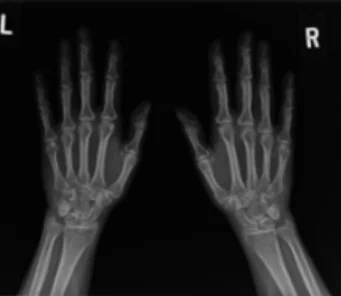
Sample x-ray of both hands

Derived from x-ray classified as:
Hand*

Patient Rho™ Score
7

Rho™ Scores range from 1 to 10 and correlate with DXA-derived BMD T-score (the lower of femoral neck or L1–L4).

Clinical Study Results

In a clinical validation study of 3,729 patients, of the patients with a Rho™ Score of 7:

  • 92% had low BMD (DXA T-Score < -1)
  • 20% had osteoporosis (DXA T-Score ≤ -2.5)
0 20 40 60 80 100 1 2 3 4 5 6 7 8 9 10 Rho™ Score
Low BMD (T-Score < -1) Osteoporosis (T-Score ≤ -2.5)

Customer Specific Notes

Optional text for customer specific notes

About Rho™

Rho™ is a regulatory approved screening tool that opportunistically identifies patients with higher likelihood of low BMD. Rho™ is not intended to diagnose osteoporosis.

*Radiologist should ensure the analyzed image (shown in the thumbnail of the Rho Report) is a diagnostic quality frontal projection of the chest, lumbar spine, thoracic spine, pelvis, knee or hand. If the x-ray was of a body part that does not match the indicated classification, or if the x-ray analyzed was not a standard frontal x-ray of diagnostic quality, the radiologist should disregard the result.

Rho™ v3.5.0 CE2862For more information visit www.16bit.ai/rho/ifu

Sample Rho Report (clinic mode) from the Rho User Manual, including its sample x-ray. Content of report may vary based on regulatory jurisdiction. Sites can add their own notes where the sample header appears.

Where it fits

Inside the systems your team uses.

A clinician reviewing a chest X-ray film

PACS and DICOM

Eligible frontal X-rays are routed to Rho with standard DICOM routing. Results return to PACS or the Rho Console in a browser.

Reporting

The Rho Report arrives in PACS as an image series in the same study, and the finding can go straight to your dictation system.

Inside your network

Rho runs on a virtual machine your team provisions, within your secured network. Images and patient data are not transferred to 16 Bit.

Report integration

The finding, ready in your dictation system.

Rho sends its finding to the system your radiologists dictate in, so it can go into the X-ray report without adding drag. The radiologist decides whether to include it.

PowerScribe

Rho sends its finding to PowerScribe, so it is there when the radiologist dictates the X-ray report. The sentence Rho sends can be customized for your site.

HL7

For other dictation and reporting systems, Rho can send its finding as an HL7 message, so it arrives where your radiologists work.

Dictation macros

We can help set up a dictation macro, so a radiologist can add the finding in your site’s own wording.

Deployment

A light lift for your IT team.

We send our standard contract, confirm the technical requirements with your IT administrator, install and configure Rho, and circulate brief training material.

  • About 1 hour

    To install Rho, train your IT administrators, and configure it for your sites.

  • Minutes

    From the X-ray reaching PACS to the Rho Report being viewable there, with the default configuration. Latency is configurable.

  • About 1 week

    From a purchase decision to screening, for motivated sites.

See the implementation details, including IT requirements and the path to go-live, or read our FAQFAQ for managers and IT administrators.

Rho Console

Track your ROI.

An IT administrator or clinical user can open the Rho Console in a browser on the same network: which X-rays were analyzed, whether a report was sent, and when a Rho-screened patient returns for DXA.

Cases

Sample data
From2026-05-01 To2026-10-12 Show lastToday3d1w1m SexAll Age50 to 120 Study typeAll X-ray
Studies (patients) 3,214 2,987 patients
High risk patients 1,402 47% of patients
DXA follow-ups 286 20% of high risk patients
Sex Female 62%Male 38%
X-ray type
  • Chest 41%
  • Knee 17%
  • Lumbar spine 13%
  • Hand 11%
  • Pelvis 10%
  • Thoracic spine 8%
Rho-generated DXAs by month
Inferences
X-ray date Rho ID Accession no. Patient ID Sex X-ray type Rho result Time to DXA (months) Inference Report sent
2026-10-09 3214 A-48213 P-20931 F Chest Positive 8 N/A ✓ ✓
2026-10-09 3213 A-48207 P-18822 M Knee Not Positive 3 N/A ✓ –
2026-10-08 3209 A-48190 P-20117 F Lumbar Positive 7 N/A ✓ ✓
2026-07-14 2411 A-41022 P-15540 F Hand Positive 9 1.8 ✓ ✓
2026-06-02 1987 A-37311 P-13002 M Thoracic Not Positive 6 3.1 ✓ ✓
2026-05-21 1840 A-36120 P-12471 F Pelvis Positive 7 2.4 ✓ ✓
Performance

Validated in held-out and external cohorts.

All publications →
  • 0.82 to 0.89

    AUROC for low bone density across three independent test sets, with similar performance by sex, body part, and race.1

  • 0.840

    AUC for low bone density in an independent validation of 4,878 patients, consistent in rural and urban populations.2

  • 0.85+

    AUC for low bone density on each of the six body parts Rho reads, in the largest test set (3,729 X-ray/DXA pairs).3

  1. 1 Bilbily et al., JACR, 2024 ↗: validation in three independent test sets, 6,100 patients
  2. 2 Auriat et al., JBMR Plus, 2026 ↗: a retrospective external validation at one academic hospital, 4,878 patients
  3. 3 FDA De Novo decision summary DEN230023 ↗: Table 2

See Rho in your PACS workflow.

Let us walk you through how Rho can add value to your practice.

For healthcare professionals

The information on this page is intended for healthcare professionals. Please confirm that you are a healthcare professional to continue.

Take me to patient information